20 July 2021

Use Artificial Light to Help You Regain the Passion

Art Model, Jenny Anne Rose ©2019 Terrell Neasley
Window light coming in from the front
 

“Wherever there is light, one can photograph.”
~ Alfred Stieglitz

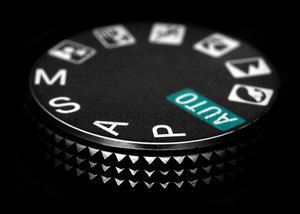
Of course, daylight from the sun is a type of natural light. Same as light coming from the moon, stars, a candle, fireplace, or fireflies. Ambient light is the opposite of flash and is a constant light that stays on continuously for a time. It might also be referred to as Available Light. Artificial ambient light can be the incandescent bulbs that light your house or the light that automatically comes on to illuminate your the interior of your fridge when you open it. The natural light photogs can get a little something out of this. Anyone can take a photo in the daylight when all the settings are done in either Full Auto or "P"-mode. Just let the camera do all the work and you're good to go. However, to bring back that passion, try this: work with ambient light in the darker settings and use any available light that you can come up with. I've used light from a cell phone held close to a model's face. I've used the moon on a 8 second exposure.

Art Model, Jenny Anne Rose ©2019 Terrell Neasley

But here are a few things you're gonna need in order to get busy with this concept. In the last post, I set you up with flash and triggers for under $200. In this case, I'm gonna stay in that same neighborhood. I'll begin with a good tripod. I've worked with several new and aspiring photogs who make a dubious mistake in my opinion. And when I say, "in my opinion", it's just that. I'm not quoting law and regulations. It's my perspective that when I see someone spend a grand or more on a good camera and then shop for a $25 tripod, I'm just gonna say no. When I worked at B&C Camera, usually the cheapest I get them out of the door with is a $160 Promaster system that will take care of their support and stabilization needs. You simply don't trust a thousand dollars on twenty dollar legs. Just don't do it.

Art Model, Jenny Anne Rose ©2019 Terrell Neasley
Strip of light coming through window light from the front

I use Promaster tripods myself! I travel the world with a smaller, lightweight carbon fiber system that handles all my needs. Its strong and more compact to travel with. Back home in the U.S., I use a bigger, but medium sized Manfrotto 190CXPRO4 Tripod with Ball Head Q2 carbon fiber unit that is the most beautiful system out there. Aesthetics usually don't count, but I fell in love with this thing a few years back and it's gorgeous as well as strong. Good sturdy legs are key. Next is having a ball head that can support the weight of your camera when it's tilted vertical. I like mine to be extra strong in this regard. When a camera is tilted vertically, it's actually off of the tripod's center of gravity. I never use the extended neck on these tripods for that very reason, as sometimes the vertical perspective is necessary.

"What makes photography a strange invention is that its primary raw materials are light and time."
~ John Berger

You can definitely pick up a used tripod system somewhere. There are super easy to test out and confirm it's serviceability prior to you trusting it with your camera out in the field. If you can get a good one for cheap, go for it. I like mine new and simply won't go for a used support system. That's just me. Every manufacturer will make tripods of various qualities, sizes, max weights, and different price points. Carbon fiber will usually run you double what an aluminum will cost. I like carbon fiber a lot. Find what suits you best in the budget you choose.


Art Model, Jenny Anne Rose ©2019 Terrell Neasley
Early morning eight-second exposure

The next most important item is going to be a cable release or remote shutter release system that plugs into your camera and allows you to actuate the shutter release without having to touch the camera itself and thus causing camera shake. Promaster makes several for just about every camera system and when I do my one-on-one trainings, I'll generally have my students pick up one for $20 to $30, depending on what cameras system they have.

Next all you need is a still subject and the proficiency to shoot them giving the lighting challenges and/or low light limitations of your camera. If you have any of the Sony A7S models, then you don't really have any camera low light limitations. If you're working with a camera with ISO deficiencies, then yes, you'll have to work within that. But generally speaking, you'll be on a tripod, so ISO 100 will usually suffice. I say generally, because if you're doing astro work, then max ISO is where you'll be. In either case doing a portrait in single-sourced low light can be both fun and challenging, but it's sure to pay off with some good work.

Art Model, Jenny Anne Rose ©2019 Terrell Neasley
Outdoor lamp post shining in through side window

You can easily get started by using the obvious sources of light around you. The lamp on your light stand; the light coming off the TV or computer monitor, an overhead patio light. Get creative with it. Try using the refrigerator light, a match, a headlamp, a night light. You can even play with different LED lights you might find in the toy section or automotive departments. Experiment! That's the main aim here. Experimentation and just play. Use a lowest ISO setting on your camera unless you are NOT using a tripod. In which case you want to use the lowest ISO you can get away with. Target an ISO that will allow for a shutter speed of at least 1/60th of a second, but cheat a little if you can. Go to 1/30th or even 1/15th and get some interesting blur. Have your model be as still as possible, but only move her head from one side to the other with a 2 second shutter. If you are not using a model and are doing night time/low light landscape, well, look to see if the wind is blowing the trees or tall grass and let that determine what your shutter should be. Just go out there and shoot and see what happens. Have some fun with this!


Art Model, Jenny Anne Rose ©2019 Terrell Neasley

10 July 2021

Use Flash to Help You Regain the Passion!


"In photography there are no shadows that cannot be illuminated."
~ August Sander

Art Model, @Kayci.Lee, ©2015 Terrell Neasley
Studio Flash, Paul C. Buff Einstein 640 with 6' Octobox

In many of my posts, I mentioned one way to expand your efforts to get excited about photo again was to start using flash in your work. Now, granted... this post won't be necessarily for everybody. Some of you togs already have a great grip on this thing and it's not your weakness by any stretch of the imagination. If that's the case, then just enjoy the pictures. However, if you do NOT have an acute aptitude for artificial light, namely flash lighting kits, then let's start small and follow me a little ways down the rabbit hole. Just bare in mind, this is not a comprehensive blog post on flash. There is too much to get into for a few paragraphs. For now, let it lead you to further research, but if you have questions, pop them into the comments.

Art Model, @Kayci.Lee, ©2015 Terrell Neasley
Studio Flash, Paul C. Buff Einstein 640 with 6' Strip Box

First things first. Can't be scared of light! As I have said before, most photog won't use it cuz they're scared of it. Ignorance of a thing is not a reason to fear a thing. Also, light is cheap. Yes, you can go pick up the high end flash units by Sony, Nikon, or Canon and pay skyward of $600 for a speedlight flash gun. If that is not a problem for you, then by all means, go for it. It will serve you well. If you need to start out on a budget, consider finding used gear like the Canon 430EX II or the Nikon SB-700 for your run and gun, on the go needs. I STILL use the Canon 430EX II that I bought used, even though I shoot Sony! I never shoot with the flash sitting on the camera, preferring instead to use flash triggers like I will point out in a minute. I have to travel small and make due with as little gear as I can get away with while I am traveling. You can find used these flashes give you lots of latitude and features that eliminate most every possible excuse you may have. You won't outgrow them and they will probably wear out from use long before they become obsolete.

There are also more options available to you. First, you can rent for a weekend for $20 bucks. Second, you can go off-brand with several makers. Check out Godox brands that have speedlight flash units for $100 to $200. You can pick these up for your specific camera brand, such as a Godox VING V860IIC which is one version made specifically for shooting TTL for Canon cameras (Notice the "C" at the end of the model name). TTL means Through The Lens, but for now just think of it as automatic mode. If your camera is in automatic AND you have it ON the camera, it communicates with the camera and sets the flash power for you. However, I strongly advise to learn manual control and practice shooting OFF-CAMERA! Be sure to get the version that is made for your camera brand.

Art Model, @Kayci.Lee, ©2015 Terrell Neasley
Studio Flash, Paul C. Buff Einstein 640 with 6' Octobox

And if you want to shoot with the flash OFF the camera, take a look at the wireless transmitter/receiver systems. It uses a radio signal that isn't so easily obstructed by a wall, for instance, if your flash sits around the corner. Easy-Peasy! This gives you the ability place your flash unit anywhere you need it besides just sitting on top of the camera. Pick up a light stand or clamps for something to mount the flash on. I'll also add in there to pick up an umbrella holder so the flash can be mounted on something that can allow it to bend and point in any direction. 

On another quick note, studio light kits are the best! I shoot with them more than speedlights when I am not traveling. These kits usually come with a two light set-up and will often include some type of modifier... possibly an umbrella or softbox. I implore you to take a look at them if they suit what you do.

"Essentially what photography is is life lit up."
~ Sam Abell

I could throw in one more accessory, which is a flash diffuser of some kind. Is it necessary? Yeah, kinda. I don't really use a flash without something diffusing the light a bit, but I've seen plenty. It's kind of like a saddle on a horse. You don't HAVE to use one, but if you don't, it's gonna be a hard ride. Okay, screw it... pick up an umbrella while you're at the camera shop. Now, back to my main thing. For about $200 you can practice and get a better grip on flash and really step up your work. Flash is cool because it's lightweight and portable. All you need is some double-A's and you're off and running. Keep in mind. Flash isn't just used for night time shots! The question I get most often is, "Why would you use flash during the day?" Simple... Cuz the sun can make harsh shadows. Using flash as some fill light is an excellent solution. Now your model doesn't have to squint because the sun is in her/his eyes. And you can face the model away from the sun without their faces going into shadow. Oh yeah. Try exposing for that beautiful sunset AND your model without using flash and you'd better be good at composite work. Flash isn't just for studio. I take it with me just about everywhere.

Art Model, @Kayci.Lee, ©2017 Terrell Neasley
Outdoor using Speedlight flash units with radio triggers

Do yourself a huge favor and just run through the manual. It may look thick but that's just cuz it's also in several different languages. Know how to turn it on and set power levels for starters and then go shoot. I'm not often shooting at 1/1, which is the full power setting. I'm usually at 1/8th power or below. Set the flash up about 45 degrees left or right of your subject. Now chances are, you'll have to manually adjust the power settings, but even with that, once you get it within a tolerable range, you can adjust your aperture to control the flash. Big Tip: Shutter Speed controls ambient/constant light (daylight or lighting that stays on). Aperture controls Flash. Opening up the aperture increases the flash's intensity, while closing down does the opposite. So within a certain range of exposure, you can use the aperture settings (shooting in Manual or Aperture Priority Mode) to control the flash output.

Play with this in varying degrees of light as well in different locations. Try out some studio light kits! Add on a softbox with it. Add in more lights... such as one mounted BEHIND the subject! Trust me. It will bring the fun back. If you're going to be in the Las Vegas area, check out B&C Camera at 4511 West Sahara, open every day from 9 am to 7 pm, except for Sunday hours which are 11 am to 5:30 pm. I used to work there. It's a beautiful store with lots of knowledgeable people who can get you fixed up. Tell them I said hello for me!

Art Model, @Kayci.Lee, ©2015 Terrell Neasley
Studio Flash, Paul C. Buff Einstein 640 with 6' Octobox


30 June 2021

Why You Should Shoot for Yourself More Often


Art Model, Melissa ©2008 Terrell Neasley

"The man who has no imagination has no wings."
~Muhammad Ali

One of the long-standing principles to personal financial stability and wealth creation is the notion of "Paying Yourself First." I like it. It basically speaks to saving money or putting some aside for retirement before you even pay bills or anything else and in doing so, the rest of your business will take care of itself. Developing the habit of paying yourself first is a good discipline that also builds into it the habit of being responsible and taking of everything else as well. Let me give you three good reasons to shoot for yourself, first.

Cultivate the Imagination

I don't think you will ever be as good as what you can be when you create using the resources of your own imagination. I didn't say you wouldn't make as much money. It's easy to jump on the bandwagon and follow the latest trends in photography. You can make money or get LIKES that way, for sure. A line of potential clients are readily at your door asking you do to something they've seen somebody else do because it looks cool. 

The latent possibilities that will net you the greatest fulfillment however will be in those original concepts that you derive from your own imagination. These are the culmination of all your years of training and preparation that come together to mix something new in your reservoir of ideas. My clients have been all the more satisfied when I presented them with alternatives for original content and concepts that better fit their ideals. The more you do it, the better you will be at achieving this goal. Cultivate your imagination. 

Art Model, Melissa ©2009 Terrell Neasley

Experimentation

Time is always of the essence it seems. You get a client gig and the expectation is to produce and render those results now. When do you ever have time to experiment, try new things, or sometimes shoot just to see what happens? You become stagnant when all you do is the same old, same old. You never know where you will find your new treasure. Venture out into new areas and genres of photo and just see what you can do. This doesn't mean you have to jump into subject matter you hate...just something different. If you don't like shooting sports, or fashion, then don't. But you can rent a new lens and play with some macro work. Find a friend who can borrow a light modifier from and play with it in new ways that maybe it was never intended for. Or better yet, see if you can create your OWN lighting. I made my own light wand with red and white light using cathode ray tubes and a battery pack, all attached to a monopod.

These are things you can bring back to the table when you are in negotiations with a client and he or she's looking for that new "fresh" look! That thing that no one else has. Something they've never seen before. But more importantly, think about the sense of fulfillment that you'll garner when you surprise even yourself by discovering that new thing almost by accident. Odds are, you will not make these discoveries shooting for someone else. No one can push your imagination like YOU can. Slow things down by limiting yourself to 50 shots or less. Shoot from a single focal length like a 50mm prime. Change your angles and shoot from either a high or low perspective. Regardless, change it up. Work outside the norm and the comfortable. Experiment!

Art Model, Melissa ©2009 Terrell Neasley


"I saw the angel in the marble and carved until I set him free."
~Michelangelo

Counter the Effects of Burnout

Don't lie to yourself. You get tired of working for someone else, sometimes don't you. Ever want to just escape photography all together... even just for a little while. Personally, I don't understand it but I know in other jobs I've had, sometimes you just need a break. In photo, that should never happen but I can see how it might come to pass. You spend all your time shooting for others that you simply get burned out. This is less likely to come about if you spend sufficient amount of time shooting for yourself. Make your own work the priority over shooting for someone else. Pay yourself first. Shoot for yourself first. Much like they tell you in the airline safety message, in the event of a decrease in cabin pressure, put your own mask on first BEFORE you help someone else.

Art Model, Melissa posing for figure drawing session ©2009 Terrell Neasley

Keep yourself healthy and in good shape and do the same for your photographic mind. Keep it sharp and exercised with new activities and fresh ideas. You, therein serve yourself AND your clients by staying fresh. You'll definitely be able to see better when your mind is renewed on a continuous basis. Mental fatigue is murder to the mind of a creative. Stave off that fatigue by doing your own projects. I could as easily add a fourth good reason: PROFITS! The better you get a feel for the industry, your trade, and your capabilities the better you know how to create your own projects and then market them via social media to your own benefit. This can be work that you eventually sell, or use it as an opportunity to showcase your wares. Either way, you can make money if that is something that is important to you. In any case your limits are self-imposed. Lack of gear does not create a ceiling for you. Its not the absence of promotion of exposure that shackle your ability to grow. You are bound to this world today by gravity, but it is your imagination that allows you to reach escape velocity and venture to the stars.


20 June 2021

Photographers! Are You Doing What You Love?


Art Model, @Athena.Demos (IG), ©2019 Terrell Neasley

“Dwell on the beauty of life. Watch the stars, and see yourself running with them.” 
― Marcus Aurelius, Meditations


I've been in this game for a while now, being serious about photography since 2005. At any given time, it's easy to get bored, burned out, or just simply tired of a profession, industry, or business of any sort. Its normal. Things can stagnate at any time. Monotony often sets in and you have to look for a little change in routine or maybe take a break to step away from your profession. In the Armed Services, we were all encouraged to take LEAVE time to blow off steam. Getting burned out could cause lapses in inspections of equipment or result in attention to detail issues.

I can't say this has been the case with me in photography. I am just as excited about it now as when I saw my first print come to life as it sat in a fresh batch of Kodak D-76 developer. And that was something in and of itself that you just couldn't get tired of. It was like magic. After careful exposure, and burning and dodging in a darkroom, a blank sheet of Ilford Fiber-based Variable Contrast Multigrade IV paper, suddenly came to live with the image you previously captured on film. I'll confess, though. I had my doubts when I switched to digital in 2007. I was a film purist because I felt digital took out the craftsmanship in which I made that print with my hands, manipulating light and shadow to make the final print. Photoshop seemed too much bits and bytes, and not enough of a man-made feel. I got over that the more I realized, its not so much the hands, but more the mind that creates and manipulates the light and shadow.

Art Model, @Athena.Demos (IG), ©2019 Terrell Neasley

I can't say its like this for every photographer you meet. I have met quite a few who's camera is more of a job than a creative outlet. They work, earn money, and that's it. No personal projects, just take the money and put the camera down till its time to earn money again. I don't begrudge them. That's their choice. As for me, I think I am still in love with photography for a few reasons, and you can do this, too!

1. Shoot What You Love

I shoot what I like to shoot. You gotta pay me a lot of money to make me shoot something I don't really want to shoot. I learned that when I first arrived to Vegas and acquired my first gig. It was for a furniture business in the World Market Center in Vegas for showroom ads. Shooting a white couch under 3 different kinds of light on the showcase floor sucked.  Granted, I still didn't know near as much as I do now, but I did it for the money. HATED IT! I learned that early on and it was a blessing. Shoot what you love.

2. Study Your Ass Off

I have an inherent desire to be good at whatever I spend the most time in. I study my ass off in most anything I want to know about. But for something I absolutely love, my study habits kick into overdrive. Its not always in a desire to be better. Most times, its because I have something on my brain that I want to create and have to learn how to do it. So I am in a constant state of learning to improve and hone my craft. Additionally, I don't stay on the same thing for too long. One day my thing may be landscape. Another day, its portraits. And then I want to kick it up and do extended exposure. 

The better you get, the more people you attract. I get other photographers who ask me questions about settings or maybe how to shoot something. I hated not being able to answer questions! If I didn't know, I'd soon find out. What's that thick black line that goes all the way across the bottom of your picture? Its a result of using a shutter speed high than the sync speed of your camera when using flash. How do I know that? I didn't want to be afraid of using artificial light, so I studied flash. So study your ass off.

Art Model, @Athena.Demos (IG), ©2019 Terrell Neasley

“The world is full of magic things, patiently waiting for our senses to grow sharper.” 
― W.B. Yeats


3. Don't Become an Island

I associate with a other photographers and learn from mentors. I started the very first Meetup.com photography group in Las Vegas. It was the Las Vegas Art Models Group mainly for helping photographers learn to work with the nude model as well as helping nude models get hired by photographers. I co-founded a more mainstream photography group, the Las Vegas Photographic Society made for photographers to help them network and grow their craft. Over the years, I developed a good reputation from sharing my knowledge, but also from increasing my knowledge with mentors, workshops, and online expertsSo don't become an island.

4. Don't Limit Yourself to the Gear You Know and Learn From Other Great Talent

I started working in a camera shop. B&C Camera, owned by my good friend and accomplished photographer Joe Dumic. He bought this camera shop when every other one was failing. He turned it around and this store not only survives, but thrives. He's enjoying his third evolution of the store. Joe has helped me immensely in my own business operations. However working in a camera store gave me the ability to tap into a knowledge base you won't find anywhere else. I was there only two days a week, but I got to learn about every new camera system that came out. 

Technology is changing all the time. Most industries can't say that. A hammer hasn't changed much since its invention. Devices capturing still images or video, and all the accessories that complement are improved every day. I tried out many of those new systems and got help from the best gurus from Canon, Nikon, Sony, Panasonic, Leica, and also GoPro, DJI, and Zhiyun-Tech. Anther great aspect is the customers I meet. I had to stay on my toes to help those beginner photographers get the right camera, fix their problems, and learn about studio gear and lighting set-ups. But I also meet professional people coming in to get gear as well. So don't limit your universe to just the gear you know. And surround yourself with and learn from other great talent.

Art Model, @Athena.Demos (IG), ©2019 Terrell Neasley

5. Learn to Play and Don't Be Afraid to Fail

I like to experiment and take chances. I know that every endeavor I take won't pan out. I'm okay with that. Sometimes I lose money. Sometimes, all my efforts are wasted; but are they really? Every time I do something that doesn't go as planned, its really a learning experience. I learn how to be wiser with my selections on who I deal with and how to prepare better. I don't mind small mistakes. And catching them early keeps the big ones at bay. Please don't take for granted someone's patience with you! So learn to play and don't be afraid to fail.

I could list several more, but this post is getting long. To add a few more, persistence despite rough times, doing your own personal projects, constantly looking at other great work, teaching photography, and traveling would be additional elements that definitely aid in my ability to stay locked in on photo. In all these years, photo has never been a dried up concept for me. And you know...another great motivator is that if you're good enough, people will pay you to keep doing what you do. Amazing, isn't it?

17 May 2021

A Mildly Complex View of a Few Things You Can Do LESS of to Get MORE - Update


Art Model, Susan ©2013 Terrell Neasley

"It’s not the daily increase but daily decrease. Hack away at the unessential." 
 –Bruce Lee
Check this out. I wanna cover a few details of some things of note that I believe can help transform you into a better shooter. It may not make sense right off the bat, but stick with me. I think you will be helped by do LESS of these things:

Ignore TV... Less!
What you see on TV is the final product of someone's content creation efforts. You can learn a plethora of information by observing what images made the final cut. Check out all the lighting schemes, posing, and final edits that you see. How effective do you think they were? What message do they convey and how successful do you feel they were at getting your attention at evoking an emotion in you to act on whatever they were selling, promoting, or entertaining you.

We often times get left in the dust with recent trends. TV gives you an idea of what some of the latest technology is doing and how its being creatively implemented. You succeed when you can begin to backwards engineer what you see. Figure out how its done and get ideas on what techniques or best practices you can employ in your own work. At the very least, you can see what the everyone else is doing and how you might differentiate yourself. Know what's happening around you and do something different. You don't always have to follow what the latest favorite is doing. In fact, I highly recommend it.

Art Model, Susan ©2013 Terrell Neasley


Watch TV... LESS!
All to often, the thing that can hamper us most is Television. We'll have at least 3 TV's in the house to keep us updated on our favorite shows, like the Walking Dead, Game of Thrones, or Dragon Ball Super. People can go nuts over these programs. Sheesh... Back Away From the Idiot Box! I say that in jest, but don't get caught up in TV, too much.

If you can back away from some of the ad-laced content for a while, check out a book on photo for a change. Learn about some new night shooting techniques. Go watch an educational video on Lightroom. There are plenty of free stuff out there, but I'm sure you've heard the old adage... "You get what you pay for". Maybe try a paid subscription service to up your game a little bit. I've always advocated pulling out your camera's manual and familiarizing yourself with features you had no idea existed, right there at your fingertips. And then go practice with it.


Study... LESS!
Here's a new one. Get your head out of the books and go SHOOT! Study long...Study wrong is what my Uncle Sly used to tell me when playing basketball. The more you contemplate your shot, the more likely you're gonna miss it. Never more true. Paralysis by Analysis. There's only so much you can fill your brain with at one time. Most of the time, what you really need is to put the books down and go pick up the camera and just shoot! Experiment. Who learned to ride a bike with a book? What person researched the mechanics of swimming before jumping in the water? Some things you learn by doing.

Yes, some research, study, reading, and observation is good for us. But at some point, you have to put it all down and let your mind and muscles work together with repetition and effort to finally learn something new. Go shoot! I can't emphasis that enough. Studying something too long is a huge contributor to procrastination. I know for fact this is speaking to some of you out there. Its time now to put to practice some of the brilliant things you've learned. Go for it.

Art Model, Susan ©2013 Terrell Neasley


"Simplicity is about subtracting the obvious and adding the meaningful." 
–John Maeda

Shoot... LESS!
You got that right. Shoot a whole lot less! I've worked with some students that I tell to shoot MORE. The vast majority of you, however, should shoot LESS. This is one case where LESS is truly MORE. The spray and pray concept of photography is only applicable in sports and other jobs where capturing the decisive moment requires advanced anticipation and a fast shutter. Shooting at 14 frames per second to capture the money shot of Russell Wilson escaping the clutches of a NFC West defender showing the look on the guy's face as that split second passes where he KNEW he had the sack, then nothing but air. Yeah...you can't try to time that shot and expect to get anything. No way. You select the drive mode for Hi-Continuous and you roll like Rambo.

When you come back with 30,000 images from a weekend camping trip, just know that you have a problem. Stop friggin' shooting so much! If you want to immediately have an impact on better photography, shoot less! Limit yourself and become more selective about what you are taking a picture of. And there's no need to get 12 versions of the same shot. All you're really looking for are a few good shots that tell the story or deliver the message. Personally, I'm a 10%er. It roughly averages out to editing a tenth of whatever I shoot. I come back from a gig with 300 images...I'm netting about 30 edited shots. I believe I usually shoot about 100 shots an hour when I'm doing constant shooting. That means I'm on a gig or have a photographic purpose in mind and when I'm finished shooting, I go home. So that's different from going on a day trip with my girlfriend and we're on the road for 15 hours. I may only come home with 200 images total because we are shooting, but we're also hiking and exploring and shooting between locations.

Art Model, Susan ©2013 Terrell Neasley


It saves you some time having to cull a million shots, but more importantly, WE DON'T WANT TO, NOR DO WE HAVE TIME TO LOOK AT EVERY-FRIGGIN' SHOT YOU TOOK! So just calm down a bit. Play the roll of a sniper instead of Machine Gun Freddie. Take some time to look at your composition and understand what makes it a good shot vs a snapshot by a tourist. You didn't buy that expensive camera to come back with the same kind of shots you've always been taking. Get to know the camera. Take if off automatic and get creative with it. Shoot less, but maybe more often. How's that for a compromise. Now, you have some things to mull over. Get to it.

05 May 2021

Why the Camera You Already Have May Be Better Than You Think: Updated Repost

Anonymous Model, Copyright 2014 Terrell Neasley

"Start where you are. Use what you have. Do what you can."

I'm a Sony shooter. I started out years ago with Canon. And when Canon no longer suited my needs, I sold about $25K in Canon gear...all of it...and switched to Nikon. Three years after that, (#switchhappens) I made the plunge again into the Sony line of camera systems and will likely be here a while. I welcome the moniker, "gear-head", but I can objectively say I made all my changes based on need. When Canon's next line of cameras came out and it didn't give me what I needed, I had no qualms about dropping that line and investing in another. Nikon's switch had more to do with dropping the DSLR line because I was sold on mirrorless systems, namely Sony, but originally Fujifilm (XE-2, remember...).

Anonymous Model, Copyright 2014 Terrell Neasley


But here's the deal. Not everyone wants to drop camera lines like that, especially if you have a huge investment in the lenses. Or, getting another camera simply isn't in the budget at the moment. It's sorta like a used car that you've put so much effort, money, and time into that you gotta get the most you can out of the car you have. I think it might help a few of you to know that the camera you have right now, is probably better than you think. You may not have the same photo demands or feature needs as I do and if you don't require all that then here are a few things you can look into.

If you have purchased a camera in the last 10 years, even a DSLR, then chances are, it's actually a really good system for general purpose use. I've met PLENTY of people complaining that they can't get a good picture from their camera, when in fact, all they need is a little bit of knowledge on how the camera works. Take a look at Auto Focus. I think this is likely the most frequent issue I encounter. Blurry images account for the chief complaints, but incorrect AF is only one probable cause.

Anonymous Model, Copyright 2014 Terrell Neasley


With the Auto Focus situation, its usually a case where the camera is set to full auto. So in this setting, it's automatic everything. The problem here is that sometimes the camera will automatically focus lock on the object closest to the camera or to a subject that is moving. The camera operator has an image with SOME things in focus, but not the thing or subject that they wanted to take a picture of. In this case, taking the camera out of Full Auto mode should be the first step. If anything put the camera in Program or "P" mode. Then take out your manual (download it from the net if need be) and look up how to use center-point AF. This allows you to point at whatever you want to focus on and the camera locks on that one thing. If you're brave enough, check out Manual Focus. Camera manufacturers my call each thing something different. Canon is AF-Single and AI Servo/AI Servo-Continuous. Nikon is AF-S, or AF-C. Then they may go into autofocus zones or groupings in some way.

The other blurring I mentioned is when the subject is blurred or the entire picture is blurred because a slow shutter speed setting than AF. There are two things that might determine this. First could be the shutter speed itself. If the camera perceives that it doesn't have enough light, it will extend the amount of time the shutter is open and expose the sensor to light for a little longer period of time. Well, unless everything is absolutely still, there will be blurring. A single second is actually a LONG time when we're talking photography. Its nigh impossible to hold your camera still that long and not get blur just from camera shake, much less have your subject be still enough. Try shooting a baby with a one-second shutter speed.

Art Model Que, Copyright 2020 Terrell Neasley


If this is the case and you are in Program mode, look to your ISO speed and raise it till your shutter speed automatically moves at least 1/60th of a second on shutter speed. You'll usually have this issue when it begins to get dark and you're still trying to shoot pics of the kids outdoors. Sometimes, if you're in full auto, the flash will pop up and blast everything with light and that doesn't look good in most cases. Raise that ISO to 800 or maybe even 1600 and try again. Go higher if need be. But there is a catch! The higher the ISO, the more grainy or noisy the image looks.

I had to make my first camera upgrade from the Canon 40D (2007) to the full frame 5D Mark II (2008) for this reason. I required better low-light performance. The 5D Mark II had a bigger sensor which means bigger light-gathering pixels. It also had the ability to handle higher ISO much better resulting in high-ISO images, but with less noise in the image. Today, I work in much darker situations that still require speed and I can reach ISOs of over 100,000 and still look clean in my Sony systems.

Art Model Que, Copyright 2020 Terrell Neasley


Sometimes, a better lens can be your limitation. If you still rock with the kit lens your camera came with, its likely not going to be the best quality and is likely not fast glass. If you're Canon, try the Nifty Fifty, the 50mm f/1.8 lens for a little over $100. And for zoom lenses, I absolutely love Tamron's line-up whether you are Canon or Nikon. Tamron makes a 17-50mm f/2.8 (for crop sensor cameras) or a 28-75mm f/2.8 (for full frame or crop sensor cameras) of which both are excellent pieces of fast glass. Those lenses have wide maximum apertures that help let in more light. If you have newer cameras, I'd even suggest the all in one Tamron 16-300mm lens (not made for full frame cameras). Just make sure you get the Tamron lens specific for your camera, either Canon or Nikon.

In any case, learning a little bit more about your camera outside of the full auto mode can work to your favor and get you better shots. When your demands surpass the camera's capabilities, THEN look to a better system. Getting a camera with numerous Phase-Detect Auto focus points because you often shoot moving subjects is a reason to upgrade. Having a system with superior low-light performance because you do a lot of low-light work is a reason to upgrade. Or maybe convenience features like built-in WIFI for the ability to control the camera or download your images from your camera straight to your smart phone, swivel the LCD screen around for selfies, have a touch-screen LCD, you have a 4K TV and want to shoot 4K video, or you want to be able to continuously autofocus while doing video. It could be that you like your friend's ability to autofocus using Face-detect/Smile-detect/Eye-detect. Or you love shooting manual focus and heard how cool the Sony system can use Focus Peak to assist with manual focus. These are all reasons to upgrade. If your camera is simply not taking good pics, then chances are you could benefit from reading the manual, because cameras these days are actually bad ass.

Art Model Que, Copyright 2020 Terrell Neasley


16 April 2021

Three Life Skills I Learn with Photography

What makes photography such a strange invention is that its raw materials are Light and Time

~ John Berger

Art Model, Alisia Copyright 2020 Terrell Neasley

Let me just dive into this:

Learning New Things

Of course, this article must begin with the universal agreement that life if full of lessons and when we stop learning, we stop living. So yes... photography has afforded me the opportunity to constantly learn new things and thus, stay alive. Rarely a day has gone by where I am not learning something about photography gear, techniques, lighting, or the business of it. I even learn when I teach. It's hard to know everything there is to know about photography. You can be an expert, a professional, or a popular speaker on the subject and there is still so much more to take in. 

I recall Richard Harrington of Photofocus, who spoke with me after one of his classes at Photoshop World. It caught me off guard, because he was asking about my opinions. He wasn't there trying to "bless" people with his wisdom, but rather to impart knowledge while seeking different ideas for his own improvement. I dig that. Keep learning. Stay on top of your game. READ! Sign up for online workshops on that one thing you are weakest at. Teach the things you are strong on. 

Art Model, Alisia Copyright 2020 Terrell Neasley


Learning How to Mitigate Mistakes

In life, mistakes are inevitable. Sometimes, you can play it off and act like nothing's the matter. Other times, you are forced to own up to it, reshoot, or admit defeat. The real trick is to minimize those mistakes. One of the constant lessons throughout my time on Earth has been to practice, rehearse, and learn more in order to make the big mistakes early. With investing, you may screw up and lose all your money. But losing all your money early on, when you have $1,000 to your name is much easier than losing $100,000 later on in your career. 

I like to spend hella time practicing, experimenting, and exploring ideas to see what works. It helps me be creative and spot new ideas. Not everything pans out, but you learn from it. I learn most from models who let me experiment and sometimes nothing comes out the way I planned. Nevertheless, they are patient with me and allow me to take chances and see what happens. Aren't there also times when you took a hit because of a mistake and then it somehow turned into a blessing? I owned up to a problem with a client once regarding equipment failure that was my fault. Thankfully, it was a multi-location project shot over several days, so I requested a reshoot on one of them. She appreciated my honesty and recommended me to her friend on a higher paying gig. Acknowledge a problem, but fix it and then blow their minds! Sometimes, you have to bite the bullet and work with what you have. With the right attitude, you can still come out on top. So mitigate mistakes with practice so that you can avoid big mistakes later in your career.

"Life is a lot like jazz... it's best when you improvise."

George Gershwin

Art Model, Alisia Copyright 2020 Terrell Neasley


Learning to Appreciate Different Perspectives

Everybody sees the same thing differently than you do. Good photography is all about composition. Good composition is all about perspective. We can shoot the same thing with identical cameras and you may key on one thing and I, another. You might shoot wide-angle while I prefer telephoto. Or maybe I want to shoot a scene at night and use artificial lights. Regardless, just because someone has a different perspective than you do, that doesn't make them wrong. Not only that, they're perspective on the same subject might be as beautiful as yours, yet their shine does not diminish your own. In many respects, we can shine together and uplift the craft of photography. Is not life like this?

A different perspective came come from anywhere or anyone. I learn so much from models I shoot. Many of them actively lend to my projects and some show me something I didn't originally see they weren't even trying to do so. You just never know where that next brilliant idea or concept might come from. All I'm saying is keep your mind open. Listen. Try to see. All the great ideas don't only originate in the shower. 


Art Model, Alisia Copyright 2020 Terrell Neasley

A list of 3 things is definitely not all there is to know about the different life skills photography can teach. I am still cultivating the art of storytelling in my work. In addition to that you get experience with social skills, leadership, mentorship, how to start/run a business, and making something sellable from abstract space from which you can earn a living. Photography has been a blessing to me and when this thing is done, I hope I can say I have given something back to it. 

31 March 2021

Recalling My Trip to Argentina: Adventures in Ushuaia 2019


Back in January, I said I would revisit and share some more of my experiences in Argentina with you guys. I didn't talk about this part of my trip much, but I had 3 main hardships to contend with while I was there. However, I want you to understand that the bulk of my experiences were positive and my overall impression about Ushuaia is that I must do this again!

I spent two months in Argentina, October and November of 2019, flying there from Peru. Only 3 days were spent in Buenos Aires, after which I flew down to Ushuaia at the southern most tip of Argentina, in the region most commonly referred to as Patagonia. 

Though I had initially tried to avoid it, I arrived just before a late season snowstorm blanketed the area. I stayed in a bed and breakfast owned by my new friend, Javier. His place is located on the outskirts of town in the woods at the foot of the mountain. Beautiful place! It was a unique experience to boots deep in snow one day and then to have spring pop out as if it was spring-loaded the next week. One week, it's all white and the next week was luscious green. 


Problem 1- Currency Exchange Rate and ATM fees

As soon as I got to Ushuaia, I became rudely aware of one major thing. I'll put it this way. I went to an ATM in Buenos Aires to withdraw $260 in Argentine Pesos. The exchange rate and fee was so outrageous, I was certain I had just did the math wrong in my head. I accepted the fact that it might be expensive, BUT, I had to get the money. Peru was charging me $7 at the ATM for each transaction. Surely, this could not be as bad as that. 

I was wrong. Sooo WRONG! To get $260 out of the ATM, it cost me $50! I realized this the next day when I checked my bank account. Crazy!! I knew I had a problem on my hands, but then again... this is Argentina. I'll just use my card.


Problem 2 - Bank Account Hack

Upon arriving in Ushuaia, I saw 2 charges on my account for about $800. Damn. Okay. I called the bank and let them know. Instead of shutting down just the one account, they shut them all down. They apologized afterwards and got me fixed back up again. The problem came when they tried to send me new cards. It took THREE weeks. WHY? Mainly due to some misunderstandings in customs. The shipping fees should have been covered, but I never got any notices that my envelop packages with my cards were being held for the sake of $1. When I never arrived, the envelops got returned to the sender. At the end of October, my situation was finally resolved and I got my cards. 

Problem 3 - Severe Knee Injury

The Vinciguerra Glacier is a beautiful hike. I had never been on a glacier before. A few days earlier, I had taken a boat tour that dropped us off at a Harberton Ranch about 40 miles to the east. We toured the property, explored a trail, and visited the Acatushun Marine Museum showcasing several whale skeletons and that of other marine life in the area.

I've had two surgeries on my left knee from a military injury and I've been told I will eventually need a replacement. I was told to take it easy. Maybe the YOLO in me kicked in and I couldn't help myself. My knee held up fine, although much of this was easy walking, no heavy packs, and gentle slopes. This was not the case for Vinciguerra. We're talking only 700 meters of elevation, but it's STEEP! I hiked this as the temps were rising. The snow melt made the way up pretty darn muddy and quite taxing. I was a champ on the flat ground. Once we started the ascent, I was a lame billy goat ready to be put to pasture. 


Nonetheless, I was determined to make it... and that cost me. I was so weak on the way back down, there was one point near the top I had to descend on steep rocky scree. I asked God for his assistance, let everyone else go ahead of me, made my peace with my life and did my best. Oh, I forgot to mention there was a sheer cliff to my immediate left. One slip and it'd be over. All that concentration for each step to make deliberate controlled motions was also mentally taxing. My knee screamed with each step, but I had to eventually give in and just do it. 

Thank God it gave out on me when we were on the flat land near the vans and not at the top near the glacier. It just gave out without warning and without any pain. It just quit. At this point, I'm pretty sure I am done with my Around the World adventure. I had already booked a flight home for Thanksgiving. I was pretty sure I'd be staying put for the next few years to come. However, after just staying off of it, I regained some strength. I was home for the holidays and then came to Vietnam early February. I spent one month doing absolutely nothing. No tours. No walks around town. Nothing. And then Covid happened and I got even more time to chill and rest my knee. 

On a brighter note, I got to explore Tierra del Fuego National Park. The trails were beautiful! I'm pretty sure it's impossible to have air cleaner than what I experienced in this part of the world. All over the place, on anything that isn't moving, you'll see the growth of lichen. This lichen can only grow in the purest air environments. 


I spoke to a local university photography class! These guys were prepared! They had already seen my website and I was there to talk for 3 hours about my photography and give a them a foreigner's perspective on cameras, technique, and photographic art. I was unprepared. I thought I was going there for a totally different purpose. When I entered and saw the room full of students, I apologized for interrupting before I realized all those students were there for me. My next surprise was that half my time would be answering questions about my macro vulva art. They were not malicious or mean, and no one maligned me for my art. They asked questions! They wanted to know "why", what influence did I feel it had on women, and even tougher... how it reconciled with my faith (because they read my bio). I spent 90 minutes talking about vaginas to photo art students. THAT was a first. 

Javier taught me so much about Ushuaia. I saw a lot of white people that I thought were European tourists. Nope. They spoke Spanish! 3000 Italians immigrated to the other side of the mountains into Ushuaia on two boats and settled that area late 1940's. But while that is part of the history, 60% of all Argentinians nationwide also have Italian ancestry. I was privileged to have dinner with a film crew that was doing a documentary on the last living inhabitants that arrived there on the ships. 


Two other things I learned about is first, how bad the North American beaver population has exploded there and wrecking havoc over the entire region. Beavers are not native to this area and they have no natural predators to keep their population in check. They were brought in in the mid 1940's hoping to profit from fur trapping. That didn't happen. These bad boys are devastating Tiera del Fuego. Not only do they fell trees to eat the leaves and build dams, but they also kill of trees and vegetation by flooding huge areas with their dams. 

I also got a chance to try Mate, "...a is a traditional South American caffeine-rich infused drink. It is made by soaking dried leaves of the holly species Ilex paraguariensis in hot water and is served with a metal straw in a container typically made from a calabash gourd." - wikipedia. I liked that it was something I could drink that did make me want to put sugar in it. I didn't feel the need to. I'm a country boy from Texas. Our tea is cold, iced, and sweeter than raw honey. 

I hope to return to Ushuaia and also see more of Argentina.