Showing posts with label Social Media. Show all posts

29 November 2023

Is Photography Going the Way of Chivalry? PART 3- Now Comes AI

“Success in creating AI would be the biggest event in human history. Unfortunately, it might also be the last...” 

~ Stephen Hawking

Vietnamese Woman, Anonymous 

Artificial Intelligence is set to revolutionize so many industries! Like the automobile, transistors, semiconductors, and the internet, AI has become the next paradigm shift. How we conduct business, advance medical research, or even find the best flight deals has become AI-dependent. We can even use AI to make AI better!

But we’ve all seen the movies. AI has been at the forefront of our minds since 2001: A Space Odyssey (1968), War Games (1983), Terminator (1984), Short Circuit (1986), The Matrix (1999), and AI: Artificial Intelligence (2001). We were thoroughly entertained by Wall-E (2008), but I didn’t like Avengers: Age of Ultron (2015) that much, but it was still a “must-see.” And let us remember the most popular AI character of all, Lt. Commander Data of Star Trek: The Next Generation.

Data analysis, facial recognition, pattern recognition, forensics... all GREAT uses for Artificial Intelligence. Off the top of my head, I use AI on the daily for writing and translation. I could add location tracking, navigation, and hotel and airline bookings. Amazon, Netflix, Disney + all use AI to recommend content to me. YouTube, Facebook, and Twitter (X or whatever) customize ads to target me. I’m used to that. But I DON'T need AI to become an artist FOR me! Help? Used as a tool? Sure. But I will come back to that in a minute. 

In the previous two posts, I covered the first two detriments, Social Media and Ethics, in detailed brevity... if there is such a thing. There is so much to go into covering all aspects of each concern that it is impossible to do here. So, I’m attempting to give details highlighting the significant or apparent parts. And now we come to AI... Artificial Intelligence. Since this is a post about photography, let me start there.

Everyone knew Adobe Photoshop would be a game-changer. I have no problem with creating composite images. I used to take pictures of exciting skies to use in other compositions. When you go on a shoot, you can’t control everything in nature, especially what the clouds will be doing. I could select a matching sky background in my “Clouds and Sky” folder and use it in my recent photo shoot. You don’t have to do that now. With Generative Fill, you can select an area and type “sky with clouds,” and it seamlessly pops in. In fact, you can do that with anything! Want a dog chewing a bone? Just select an area and type it in. Don’t like the dog it generates? Be more specific! [Green Great Dane with six legs and ears like an elephant, pulling a knife on the mailman.] BOOM! There you have it. 

Vietnamese Woman, Anonymous 

This took off with Social Media filters, mainly on Instagram. There has been an over-dependence on post-work edits for a long time instead of getting it right in camera. "I'll fix it in post!" became my most hated phrase. With so many AI developments, you can create the shot you want without a camera. Can you purchase AI-generated stock images? Shutterstock says no, although they use AI to help you find the content you want. They said: “However, we will not accept AI-generated content being directly uploaded to our library because we want to ensure the proper handling of IP rights and artist compensation.” 

iStock also decided to ban AI-generated content. Rounding out the big 3 of stock agencies, Adobe is all in! Or are they? Adobe tried to justify using AI-generated content last year, but recently, they caught hell for it. They initially decided to accept it, provided the creators labeled it AI-generated. But now...

"After it came to light that Adobe Stock is selling AI-generated images of the Israel-Hamas conflict, the photo giant has changed its policy regarding fake images that depict real events. Adobe addressed the issue in a blog post last week, announcing it will prohibit AI images with titles that imply they depict newsworthy events. A Washington Post report found that unlabeled AI images are being sold on Adobe Stock; something that the company says it will take action on. 'Stock content should always be clearly marked when used in editorial content to help ensure people are not misled into thinking a real event is being depicted by the stock content,' says Adobe." Matt Growcoot,  Adobe Stock Changes Policy on AI Images Depciting Real Events, Petapixel, 27 Nov 2023

Selling AI-generated images of the Israeli-Hamas Conflict? I can’t even fathom how short-sighted this notion was. Actually, there WAS no short-sightedness. It was deliberate! Making a policy to allow AI-generated content with the requirement that it be labeled assumes that people won’t remove the label. Adobe is not that naive. They made a qualifier to be used as a hold harmless clause upon purchase to exonerate them of any liability or wrongdoing. 

Vietnamese Woman, Anonymous 

But what else do we have? Photography Contests! 

Artist Wins Photography Contest After Submitting AI-Generated Image, Then Forfeits Prize

An A.I.-Generated Picture Won an Art Prize. Artists Aren’t Happy

And this has been going on for years! Sometimes, a Photoshop-manipulated image goes against many photo contest rules. But now, as I mentioned, you don’t need a camera, you don’t need to be on location, and you don’t need to have a subject in front of you! We sit at the precipice of the in-house “photographer,” who is waiting for your descriptive request! Cameras use AI tech to autofocus and process data from the sensor. Computational photography can correct optical aberrations. You can use a wide-angle lens but fix it in post to adjust for barreling, pincushion effects, or perspective preferences. All that is short-lived. With AI, you can just eliminate the camera and lens altogether!

But this isn’t just about photography. Writers are cool with using AI as a tool to HELP with writing. NOT as a replacement for writers. And SAG actors are fighting to maintain the rights to their digital likenesses. Sculptors? They are okay for now until someone builds the first robot artist. AI could be working on that right now... building a physical construct to give itself an existence outside of bits and bytes. Conspiracy theory? I don’t know. I’m just saying.

Vietnamese Woman, Anonymous 

Is art done by AI still art?

Wow. This has been debated ad nauseum already. I agree with the crowd that says no, and my reasons as a photographer may be hypocritical. Back in the day, they used to say photography couldn’t be considered art for the same reasons I can’t consider AI-generated outputs as art. You can’t use a mechanical device (algorithms or software) to reproduce something for artistic purposes. They said the same thing about cameras. My argument for photography is that I am manipulating light to create a realistic or surreal representation of what I see using tools... a camera, a lens, and other accessories like flash, triggers, tripod, or ND filters. 

This is different from what AI does. AI has a database of a trillion images that it amalgamates into a single representation of a user’s request. Because we have built an internet, mainly via social media, full of images of every subject matter known to man, AI can extrapolate those pictures and make a single ideal image on demand, per your specific instructions. Looking for an Asian man wearing a NY Yankees baseball uniform, standing next to a lake with his Vizsla-Dalmatian mix dog, holding a rod and reel with a bearded dwarf shark on the hook, on a snowy day? AI extrapolates a mix of billions of images to combine to create that one requested image. It may be my shot of a Vizsla dog, but it is colored like a Dalmatian. It could be your photo of an Asian fisherman, my friend’s vacation photo from Lake Tahoe, and everything else from images taken off Google.

AI isn’t inspired to create anything. It’s not alive (yet). It has no feelings and does not create intrinsically. When it draws something, it’s not doing it from life experiences but programming from a database. It has no reason or purpose to create beyond being told to do so. It doesn’t learn. It becomes more proficient, but that’s not learning. To learn, you have to be aware of yourself, the material, and its application beyond. AI improves its programming with better programming, input, and data. But at least for now, it’s no better than the questions asked of it. A chef creates a dish and tastes it to see if it needs more salt, based on his or her preferences, the nature of the food, and guesses what others might enjoy. AI can’t do that. It can’t taste. It draws only from a database and makes what it is told.

"It’s not just artworks: analysis of the training database for Stable Diffusion has revealed it also sucked up private medical photography, photos of members of the public (sometimes alongside their full names), and pornography." Laurie Clarke, When AI can make art – what does it mean for creativity?, Sat 12 Nov 2022

Vietnamese Woman, Anonymous 

And what are the legal ramifications facing AI? Are regulations on the horizon?

This is the fundamental matter! At what point can I complain that an AI program used my copyrighted intellectual property without my permission. Well, it’s all up in the air right now. AI companies argue that their work output is Transformative of any copyrighted work and, therefore, subject to Fair Use. 

Problems will inevitably arise in greater magnitude, with AI affecting millions of people and the companies behind them. AI is only as good as the humans who create them and the input data. Remember, Facebook implemented AI into its photo recognition software. It labeled black people as gorillas. Twitter unveiled a bot from Microsoft that had to be immediately taken down after it began spewing racist and sexist tweets in under a day. Other examples include Amazon’s AI hiring algorithms that discriminated against women. In 2019, it was found that an algorithm used on 200 MILLION people was fed faulty data points that made it conclude that white people needed more healthcare than anyone else. This impacted funding for hospitals that treat lower-income areas, insurance company payouts, and forced minorities to pay more for the same level of care. And COMPAS (Correctional Offender Management Profiling for Alternative Sanctions), whose AI algorithm erroneously concluded that black people were twice more likely to become repeat offenders than white people. But did it incorrectly conclude, or does it reflect the biases of the people who programmed it?

Vietnamese Woman, Anonymous 

AI is the scariest of all the detriments I see for photography. Creating digital images and videos using no hardware, people, or reality is a realistic concept today. Not in the future. TODAY! It’s all a matter of how far people want to go. Studio executives can decide not to use any writers. Hell, newspapers did it with photographers a decade ago! Anybody with an agenda can create enough rage, fear, and dissent to manipulate minds by the millions, using AI as weapons of mass DISinformation. As for art, I hate it. It’s getting so real you can hardly tell. Specifically, I detest art nude AI. When it looks a bit too perfect, it usually is. AI still struggles with skin texture, hands, and genitalia. Body portions can sometimes be off, but they do an excellent job with hair, eyes, and facial structure. In another year or two, you won’t know the difference. 

Social Media, Ethics, and Artificial Intelligence are my top three detriments to photography. I liked AI when I saw it used to show what ancient statues of people might look like in real life. I remember people lost their minds when a forensic study on Jesus Christ and the computer model depicted him as black. I’d rather see AI as a tool for us to do JOBS more efficiently and leave creative work alone. That’s how man first began. We expressed ourselves and our individuality with clothing, accessorizing how we wore it. We made things out of wood and stone. And we drew pictures. That’s ours. And therein lies the base of our humanity. We learned to help one another. And we drew pictures. AI should be like the Jetsons, where AI, robots, and machines handle daily tasks that free up time for humans... to create more art.
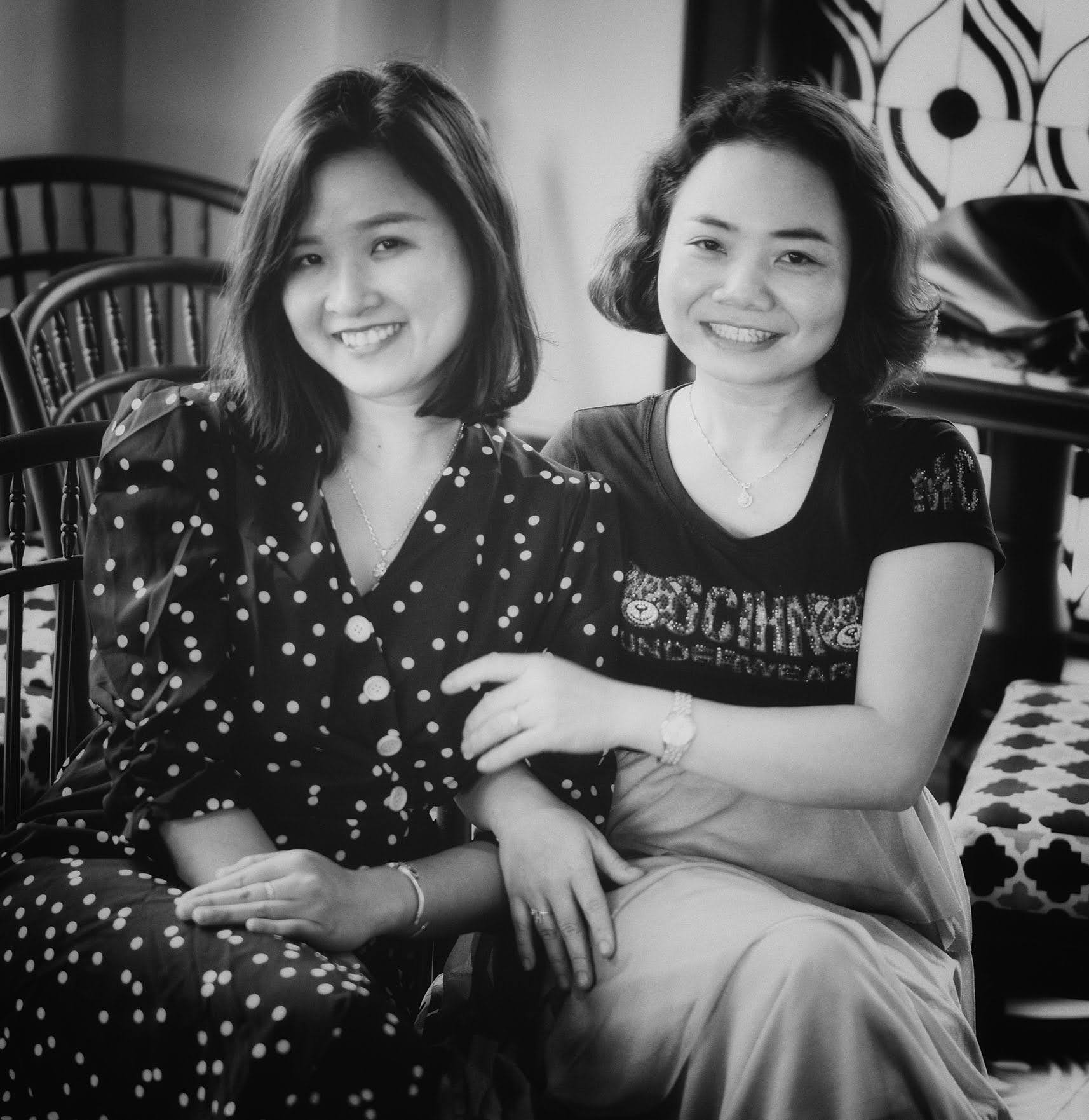

Vietnamese Women, Anonymous 


13 November 2023

Is Photography Going the Way of Chivalry? PART 1- Social Media

Art Model, Alba

In the world of social media, likes, subscriptions, reels, shorts, and favorites... we sometimes become caught up in things that don't matter in the real scheme of things. We search for the next trendy topic, subject, or technique and adopt it like everyone else does. In some ways, I have no problem with this. At its core is artistic expression, or at the very least... expression.Yet I do see some irredeemable aspects that harm photography as a whole. I want to become better in my photographic art journey. I aspire to find more fulfilling intrinsic value in the artistic genre I love and I feel it is also important to consider the health and advancement of the BUSINESS and INDUSTRY of photography as a whole.

The barrier to entry into photography has lowered beyond belief. In truth, it always was, or at least has been for the last 50 years. You could get a Kodak Brownie for $1 back in 1900 when it was introduced. Today, that's equivalent to $35 and it stayed in production for more than 80 years. The Canon AE-1 was quite sophisticated and robustly built when it came out in 1976 and is still a workhorse for many shooting film today. To some degree many were fooled into buying into the complexity of photography. Is it hard? Yes. It's meant to be hard! But it's learnable with minimal equipment. The dynamic mix of optical focus, film(sensor) sensitivity, shutter speed, and aperture control, plus how all that manipulates light, are the only real elements that matter. Everything else is garnish.

Art Model, Alba

Talent is talent and won't be denied, so I welcome it. The challenges should inspire everyone to level-up their photo skills. Technology and marketing has given us cheap entry-level cameras because manufacturers saw that as a new market. It's why I taught and gave my secrets to photography groups, clubs, and classes. All the while, encouraging those I mentored to be better than me... not like me. 

Optics were cheap but eventually, technology caught up and even cheap glass was good glass! You could get in the game for $400 and get $100 rebates during the holidays or wait until the following year and get last year's camera used for $200. What really drew fear into would-be photographers, even today, is lighting! Cameras, a few lenses... sure? Lights? No, especially not flash. But so what? You're at least in the game. What now? Website... Nope. SOCIAL MEDIA!

Art Model, Alba

Social Media has Been Revolutionary

No longer is it the Facebook of old that provided a way for college kids to communicate. It's not the MySpace that allowed us to express our digital selves and share with the world who we thought we were. It's become a medium that has flipped the script and now instead of wielding it as a tool, we are being wielded by it. It is STILL a tool, but not one used by us, I'm afraid. It has evolved and changed the perspectives on what we believe is important and valuable to us. Having 100 thousand followers on twitter and getting 10 thousand likes on a photo on IG has far more credence to our sense of worth than say 20 years ago, when we'd base our worth on the true value of an image because it generated actual dollars. How many times has this photo sold and for how much? How many books sold last month?  Social Media has transformed to appeal to our base desires to be wanted, desired, and feel "liked" to a point where we are OVER-SHARING in an attempt to get more likes. It has effectively asked us to give up our own sense of agency and autonomy and what do we get in return? The possibility of likes and followers which are arbitrary concepts that I thought got left behind in high school.

Today, social media is a tool which we THINK we use to share our images, promote our businesses, and connect with other users. While that may be partially true, you need to understand how revenue is generated by the various platforms. We are marketing subjects, data-mined and manipulated to buy products or influenced on how to feel about a topic, person, organization, or event. Whether commercial or political, social media is garnering our attention with one hand and then directing us how to feel about a product, a political position, or a group of people. Start your morning lingering in bed looking at memes, clips, and reels about social injustice and you go to work mad without even understanding why. The more reactions we have on their platforms, the more money they make. Fear and Anger generates the largest volume of reactions which means greater potential revenue for these platforms.

Art Model, Alba

Cell Phones and the Capability to Instantly Deliver Content

Cell phones has permeated our lives in a way that best facilitates our need for social media. If social media is the drug, cell phones are the syringes or the means of which we introduce this product into our minds. Cell phone photography has been a big boon to the business of photography. Because of increased camera quality and convenience, there is no shortage of shared imagery available for us to see. With so many platforms our minds are inundated with an over-abundance of pictures and the fool thing is that many are so damn similar!

Our phones have given us the means to create on the fly and everybody has become content creators. It's the new form of communication. Kids express themselves via reels, memes, Tik-Tok videos, and Instagram. All of which provide means to edit and create instantly. Data can be uploaded in mere seconds! But inevitably, that comes at a cost. Work becomes commoditized. It's all the same... a homogenous collection of derivative work and creations. Once one thing proves popular, a deluge of similar content floods the platform. I feel cheated. I feel cheated of creativity and originality when compared in ratio to the amount of artists and participants on each platform. I wish I had the numbers or even a way to calculate this ratio. How much original content per capita on a single platform?

Art Model, Alba

Conclusion

Sure Social Media has its pluses, pros, and benefits. But this is a Pandora's Box that has gotten away from us and I don't think there is any way to close it again. I'm not on Instagram since about 2018 when I got kicked off because I realized they were shadow-banning me, that is, several of my posted images didn't show up on other people's view of my profile, despite me seeing it on mine. I talked about it on my blog, which I posted on Facebook. Next day... ACCOUNT DELETED! But even when I joined in 2015, I was still concerned about these same things!

"What my hope is, however, is that photographers in general do not become so dependent on social media that they mismanage that trade-off. A couple of things can happen as of a result of this. One is that the art suffers. Less work is done in camera and the art side of photo is traded for Instagram filters. When this happens, less attention is given to craftsmanship. Photogs no longer worry about knowing their equipment or understanding light. Less attention is given to presentation, the print, or the art. In addition, photogs may have a tendency to give away their best work. In their exuberance to post quickly, filters become the new edit, and their best stuff gets published for free. Instead of hanging on a wall, the farthest potential a great shot might achieve is a 72dpi square screen-size image on a profile wall."

~ Photo Anthems Blog,  Finally Getting Down with Instagram, May 2015 

Social Media is different for me. I do landscapes, portraiture, but also nude art which isn't deemed by many platforms as "sociable". So, I'm a different case. If you can find benefit on the platform of your choice and not get lost in it or be negatively influenced, then maybe it's good for you. I hope you can financial benefit from it. You be the judge on whether or not it's become a detriment to your life, work, or art. I hope more people can take back the power dynamic of social media and not let it choke the life out of photography. No everyone is not an artist on social media, therefore the vast majority can ignore this post. But for the many who do call themselves, artists, the business of photography is at stake. Make sure your business is solid, but let's not do so at the expense of the industry. It is the foundation on which your business sits.


Art Model, Alba


30 August 2019

Five Problems with Social Media and Photographers

First Nude in the desert. Art Model, Patti from neg scans. ©2006 Terrell Neasley

"Popularity isn't just something that happens. 
You have to give something in exchange for it, and that's the dangerous part of the process."
~ Robert Bringhurst

I know only a few people who are not on social media at all. I don't know anyone who is a photographer and NOT on, at least, one social media platform. I no longer have an IG account, mainly because of my art nude work and how I feel about the company. Even as I first opened my account, I had concerns. As a whole, I've never been sure how I have liked the term "influencer" for social media stars. The connotation sounded almost sinister to me. You might more accurately call them "manipulators", or "puppeteers". Regardless, this post should be taken into consideration for people who are creatives, artists, but specifically photographers.

Here are FIVE things to be careful of:

1. Social Media can dictate how you shoot

SM eliminates differentiation by homogenizing all of your work. How is this done? Because now, LIKES and FOLLOWERS become the most important thing to you and your popularity takes precedence over your originality. Instead of trying to come up with an original concept, it's far to easy to copy the trend. You become beholden to the influencers and the followers who like them in order to get those likes and followers, yourself. In effect, by letting them dictate WHAT you shoot or HOW you edit your work begins to look like someone else's and when the multitudes do this, your art is homogenized, or assimilated if you like that better.

This might equate to shooting a ton of extreme shallow depths of fields for your portraits because you see that's what people are clicking the like-button most for. Maybe you start trending your work to B&W, doing more burning wool shots or becoming a documentary-style wedding shooter. All that's fine if you want to go there, but consider the impetus that puts you on that path. Is it YOUR idea or a social media trend?

First Nude in the desert. Art Model, Patti from neg scans. ©2006 Terrell Neasley
There is even a profitable market out there to BUY followers, instead of producing excellent work and earning them. I guess nobody has time for that! Just click on one of the ads that promise to add 1000, 5000, or 10,000 followers! Problems solved, right! And it doesn't make any difference if these are fake accounts! Maybe I'm just old fashioned. Maybe I'm just ranting again. But, feel free to be honest with yourself. You don't even have to tell anybody. Ask yourself what is most important to you as an artist and what that translates into. What do likes actually do for you? Does it put your art on a wall? Can you eat "likes"? Can you show the power company your IG profile of 1000 followers instead of catching up on that light bill?

2. Social Media can dictate how you sell

Getting your work out there, sharing your adventures, art, and ideals, are all reasons to market yourself on a social media platform. Traditional or Conventional Marketing concepts get abandoned with newer social media trends. Traditional Marketing is based more on gathering information and using that information to show you where to spend your marketing and advertising dollars to optimize your bottom line. Social Media, however, is consistently about maximizing popularity while "thinking" it might translate into money. That is the illusion. It's akin to basing your retirement plan on your success at the slot machines.

How you sell should be based on identifying your market, knowing the correct value of your work, knowing your competition and competing effectively, and then devising a strategy that provides a product or service that optimizes your money based on these factors. Social Media is supposed to be only a single part of a good marketing promotional campaign. That is what determines how you sell. So, is it?

First Nude in the desert. Art Model, Patti from neg scans. ©2006 Terrell Neasley
3. Social Media can dictate how you feel about your work

Comparisons are the enemy of a whole lot of the psychology of how we feel about ourselves. It's just an opinion, but I think there is a high percentage of cases of depression and anxiety that would be effectively eliminated if we ceased to compare ourselves with other people and/or stopped giving a damn about what other people think of us. I know I'm guilty of this. I won't even go in-depth on this, but I will let you answer for yourself. Do you spend any amount of your time looking at other people's work/likes/followers and then have a negative feeling about your own?

4. Social Media often offers a false sense of achievement

There is not a lot to say about this either. You can ask yourself a similar question. Are you popular on social media and if so, how has it changed your quality of life, relationships, financial freedom, etc. If you are celebrating sitting on 50K FOLLOWERS, but not a damn thing has changed in your life for the better... well, maybe that sense of achievement is misplaced. Maybe I don't know what I'm talking about, but you can evaluate things on your own. How much of your SM life is honestly reflected in your actual life? Are you truly as happy as your profile seems to imply? If you are not, how much effort does it take to keep up the charade and what does it cost you to maintain the lie?

First Nude in the desert. Art Model, Patti from neg scans. ©2006 Terrell Neasley
5. Social Media can distract from real goals

And this is the culmination of everything above. If it's not being used effectively as a part of a valid promotional/marketing strategy, then it is negatively dictating how you shoot, how you sell, how you feel about your work, and can easily give you a false sense of achievement if you are, in fact, popular.

So then what are your real goals? Have you sat down and given this some thought? Have you written down these goals and where are you now on that path towards them? I think, used properly, social media can be an excellent platform to get your work out there, be noticed, make money, and have fun. I think the question becomes "WHO CONTROLS WHO?" So what is the driving force behind your motivations and behaviors on social media? Is it a tool or has it become the master? If you are not on the path to those goals, then regroup and refocus. Plot out that path again. If your current social media methods yield only marginal results, it's only wise to put those resources of time, energy, and money to better use with other possibilities.

First Nude in the desert. Art Model, Patti from neg scans. ©2006 Terrell Neasley